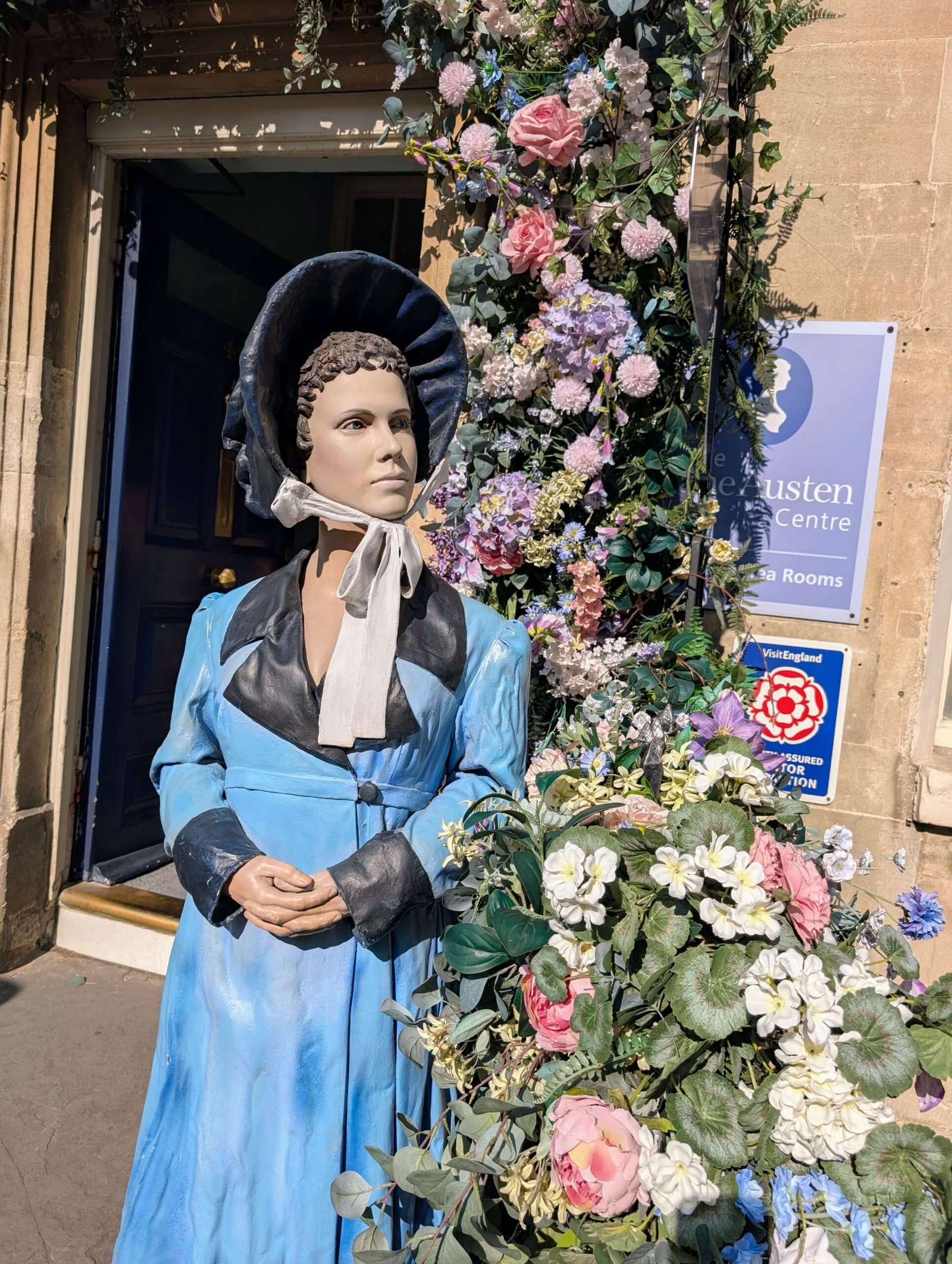
If you’re a Jane Austen fan visiting Bath, chances are The Jane Austen Centre is already on your list. It’s one of the city’s most famous attractions, sitting right up there with the Roman Baths and the Royal Crescent, and it’s dedicated entirely to one of England’s most beloved novelists and the city that shaped so much of her work.
I visited The Jane Austen Centre during a recent trip to Bath, and in this post I want to give you the full picture: the history of both Jane Austen’s actual time in the city and the Centre itself, including what you can expect to see and do inside, practical information on tickets and opening times, and my honest opinion on whether it’s worth your time and money.
The Jane Austen Centre in Bath – Is it Worth Visiting?
Before we get into The Jane Austen Centre itself, it’s worth understanding why Bath claims Austen so proudly in the first place. After all, she wasn’t born here, and only really lived in Bath for a short time!
However, Bath had a huge impact on Jane Austen, and it’s important to understand that context before visiting the museum.
Let’s get into it.
Jane Austen’s Bath
Jane Austen lived in Bath between 1801 and 1806, after her father, a clergyman, retired and relocated the family to the city.
She wasn’t a total stranger to Bath before then; she’d visited on earlier occasions and used the city as a setting even before living there.
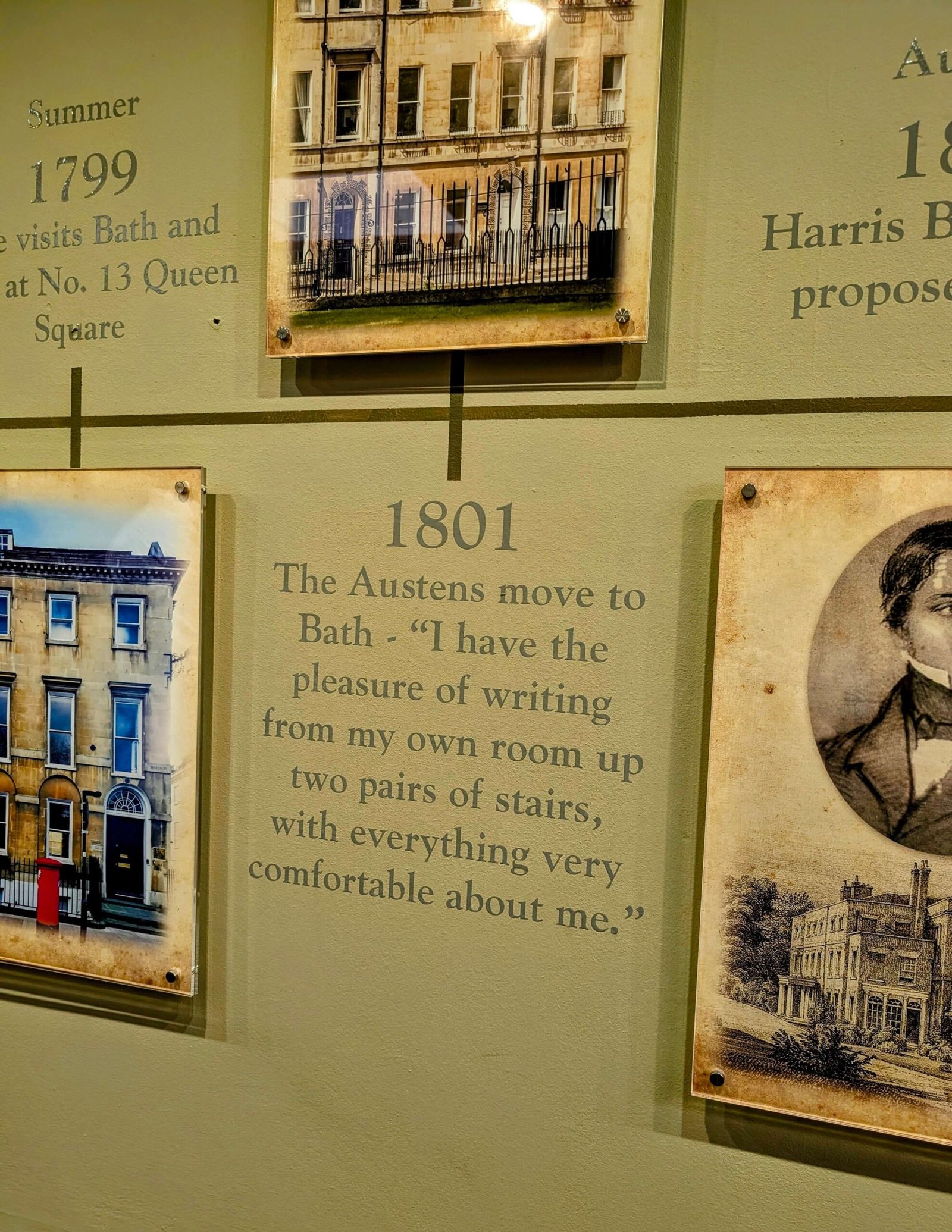
During her residency, she made revisions to an early work called Susan (which would eventually become Northanger Abbey) and began a new novel called The Watsons, which she unfortunately never finished.
Austen moved between several addresses during her time in the city, none of which survive as a preserved Austen home today, which is part of why the Jane Austen Centre exists in the first place: there isn’t a single ‘Jane Austen’s house’ in Bath the way there is in Chawton, Hampshire.
Instead, the city itself – its assembly rooms, its Pump Room, its promenades and social scene -became the backdrop for two of her novels, Northanger Abbey and Persuasion, both of which are steeped in Bath’s Regency-era social world.
By all accounts, Austen’s feelings about Bath were mixed. She’d grown up in the countryside and was ambivalent about the gossip, matchmaking, and status anxiety that made up the city’s social scene. This comes through clearly in her writing, which often mocks Bath society.
The History of The Jane Austen Centre
The Jane Austen Centre first opened in 1999, with the stated mission to ‘inform, entertain, and make every visitor happy.’ It’s located at 40 Gay Street, in a Grade II listed Georgian townhouse just a few doors down from a house Austen briefly lived in during 1805.
As I mentioned earlier, the Centre isn’t actually a preserved Austen residence, but a purpose-built exhibition telling the story of her connection to the city. It was founded and directed for many years by David Baldock, who’s been behind several of the Centre’s most notable additions, including its famous waxwork (more on that later).
Today, The Jane Austen Centre is one of the most popular things to do in Bath, attracting more than 150,000 visitors a year, with up to 1,000 a day during peak summer months!
It also runs the Jane Austen Festival, the largest and longest-running Jane Austen festival in the world, which has taken place annually since 2001 (aside from the pandemic years) and includes a costumed promenade through the city, balls, and talks.
The Exhibition
The visit begins with a 20-minute welcome talk from a costumed character actor (ours was Marianne Dashwood from Sense and Sensibility, which I was very happy about as I’d just finished reading it!).
The actor was super passionate and performed the part beautifully, and I thought that this was a really unique touch.
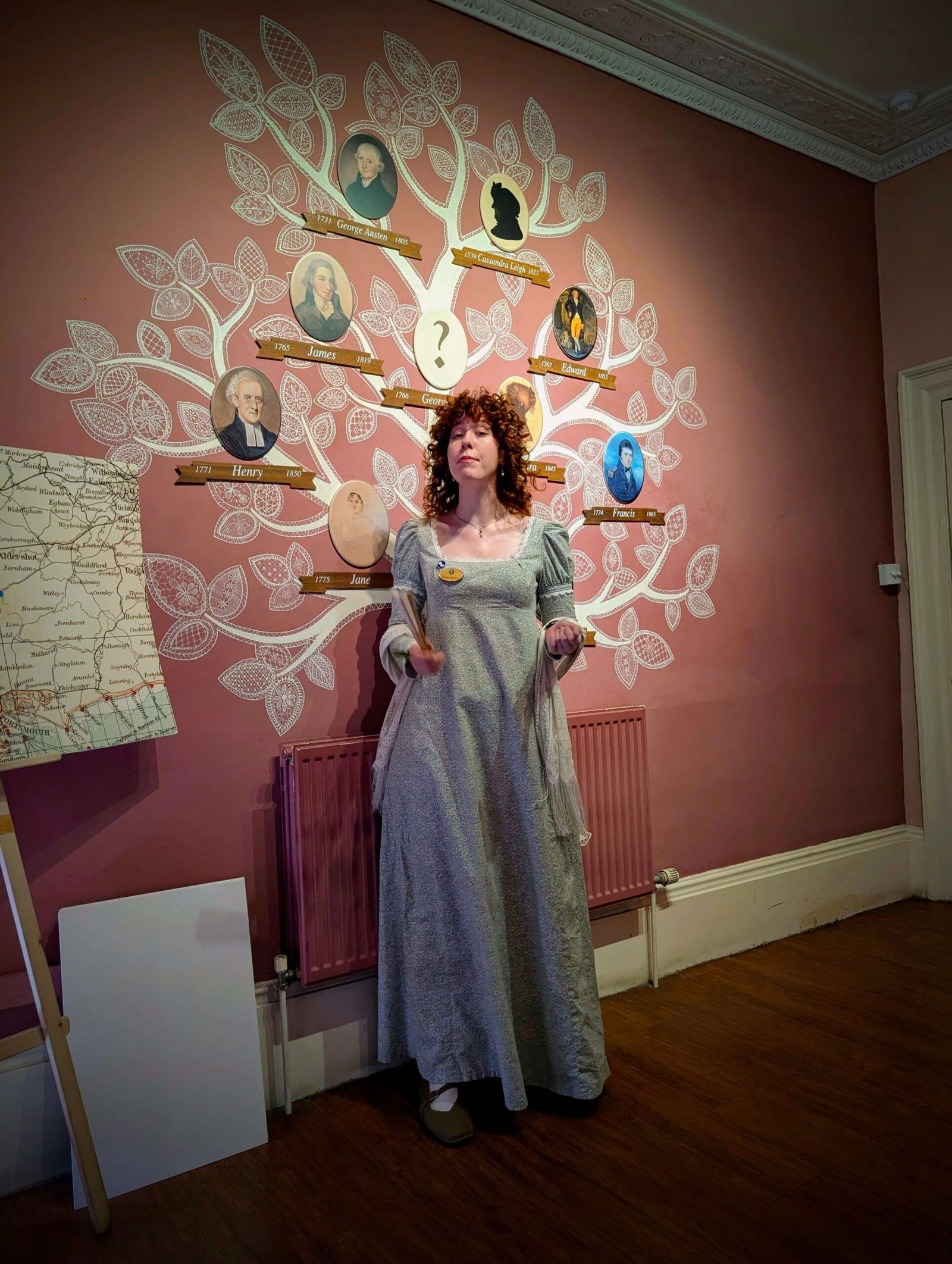
After the talk, you’re free to explore the exhibition at your own pace. Throughout, you’ll find character actors dotted around who are happy to answer questions and add extra context as you go.
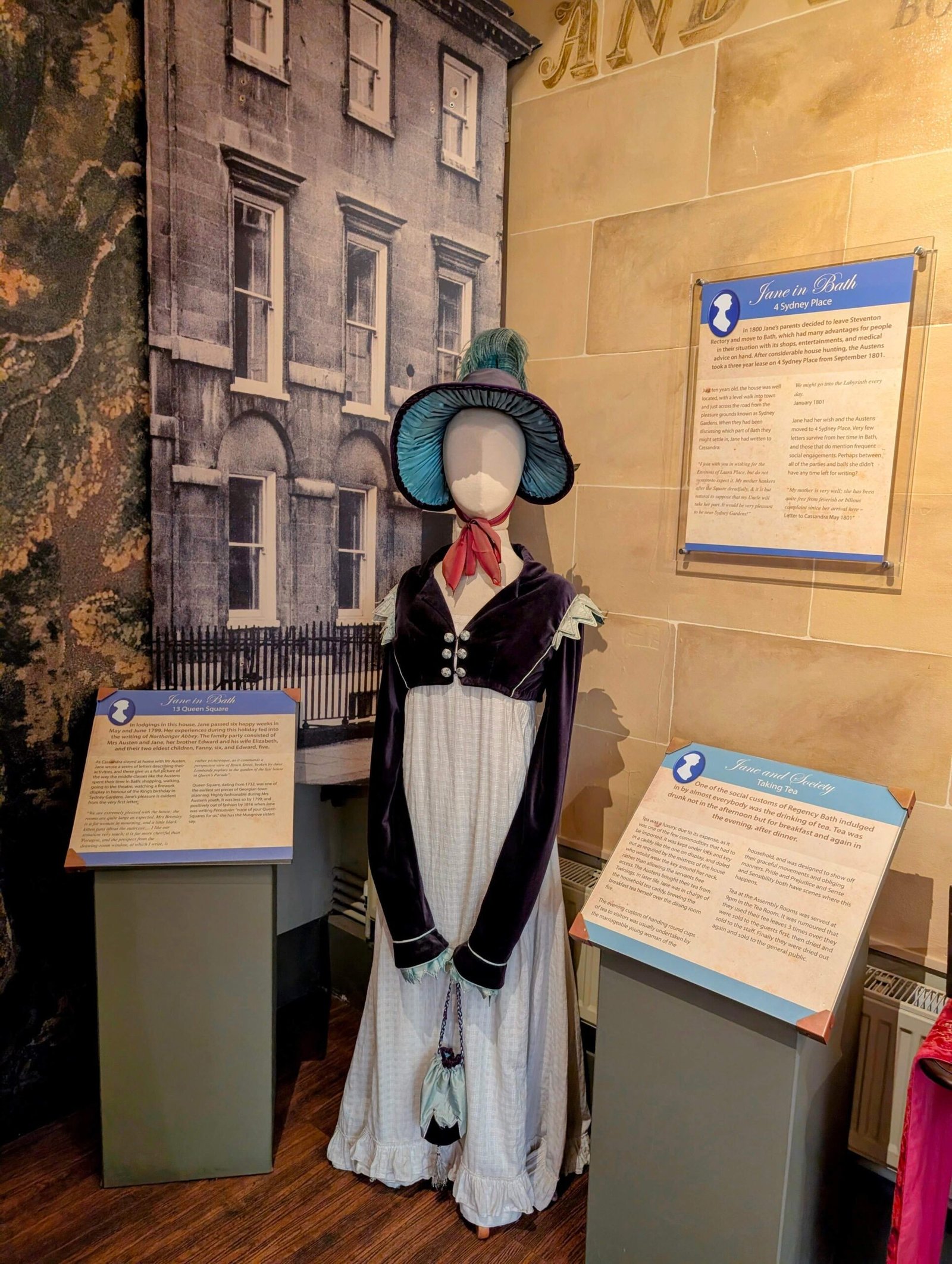
Exhibits cover Austen’s family tree, her time living in Bath, portraits of the author, the social customs and etiquette of Regency society, and how all of it fed into her novels.
It’s quite a small museum overall, and I would say that even if you read everything, you only need about an hour here.
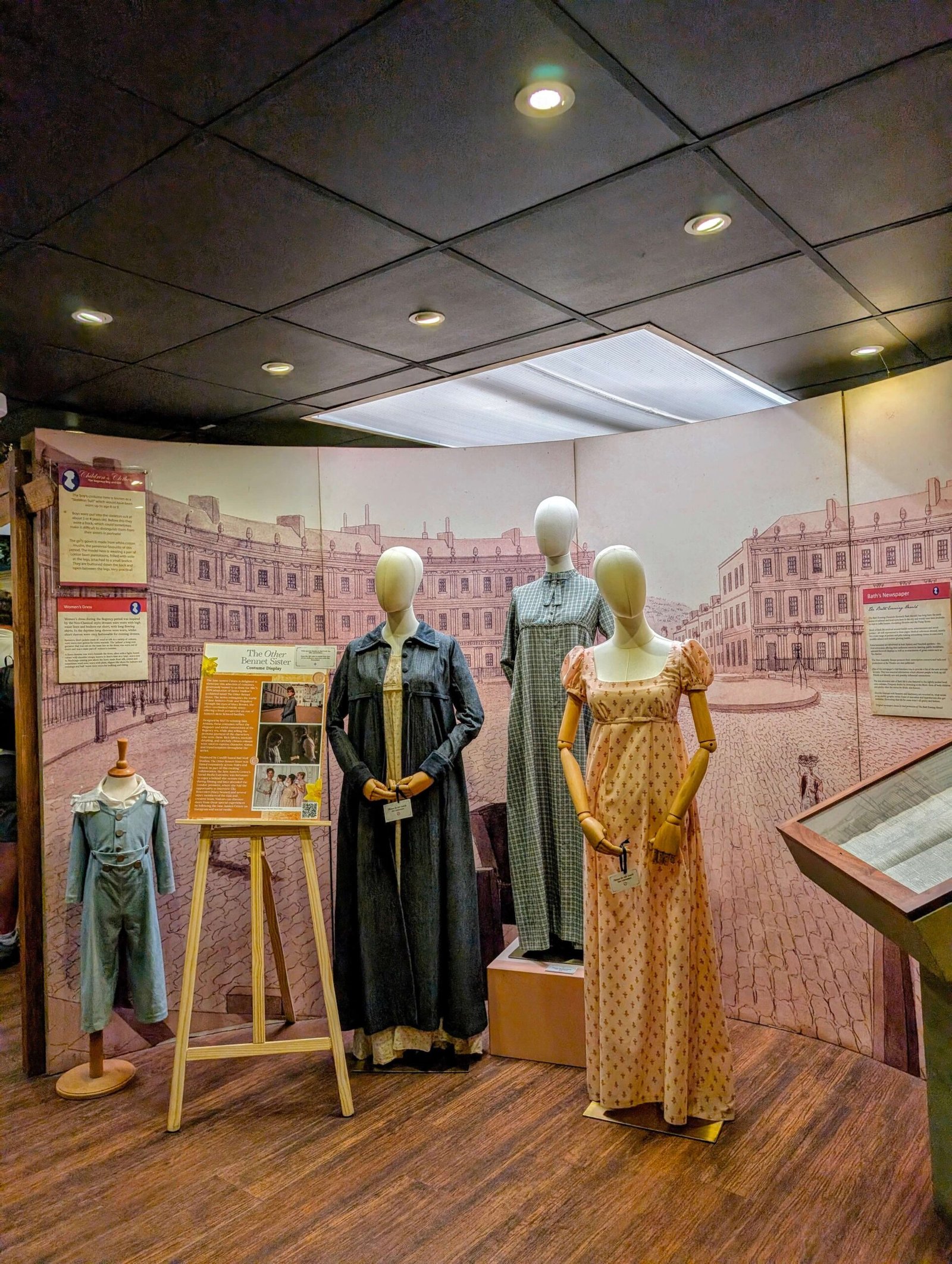
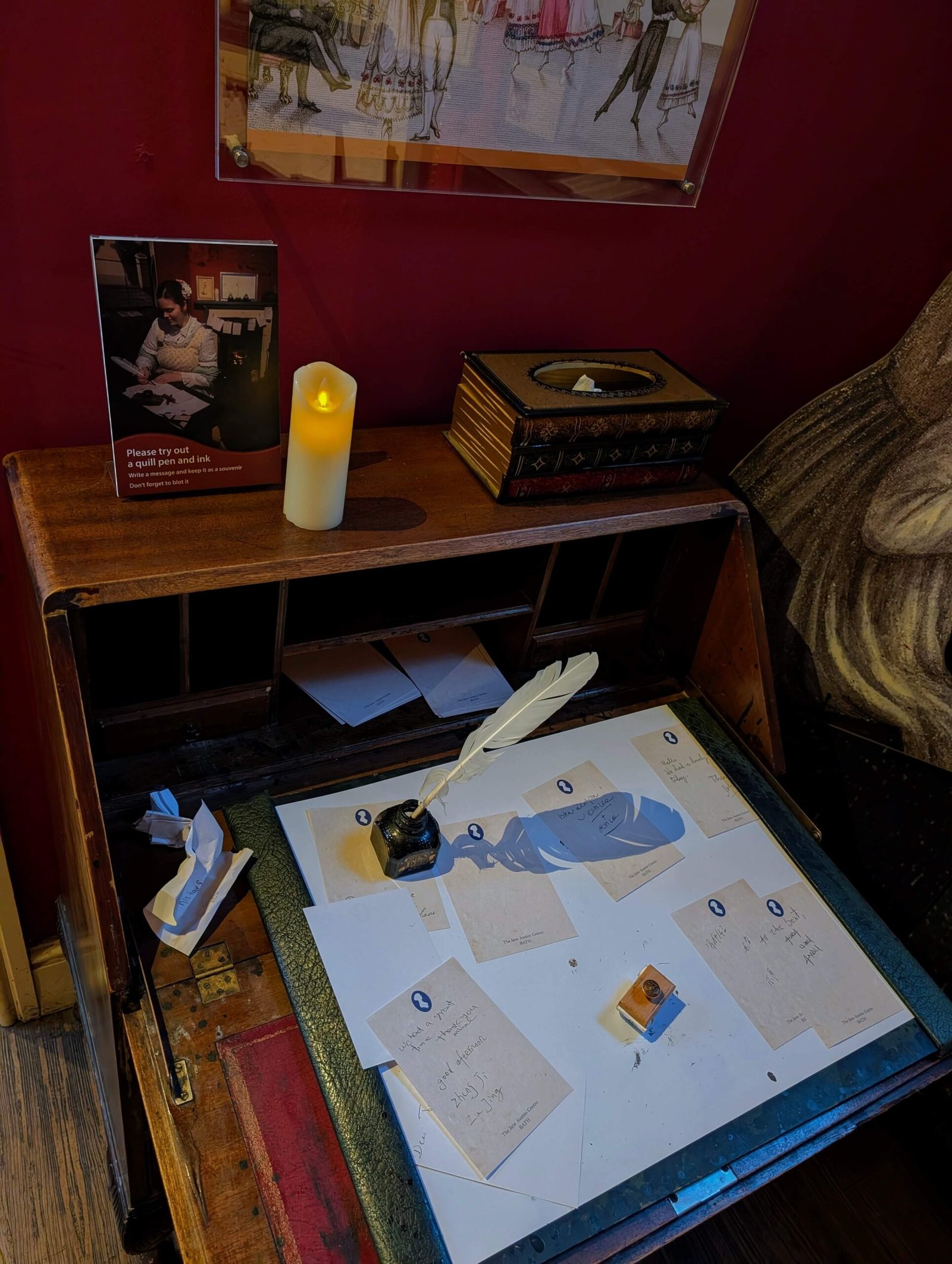
At the end, you can even try on some Regency costumes (think bonnets, shawls, top hats, and full dresses), try your hand at writing with a quill and ink, taste a Bath Oliver biscuit, and have a go at some Regency-style parlour games.
It’s a really immersive setup, which is clearly part of the appeal for a lot of visitors, especially those with children.
The Jane Austen Waxwork
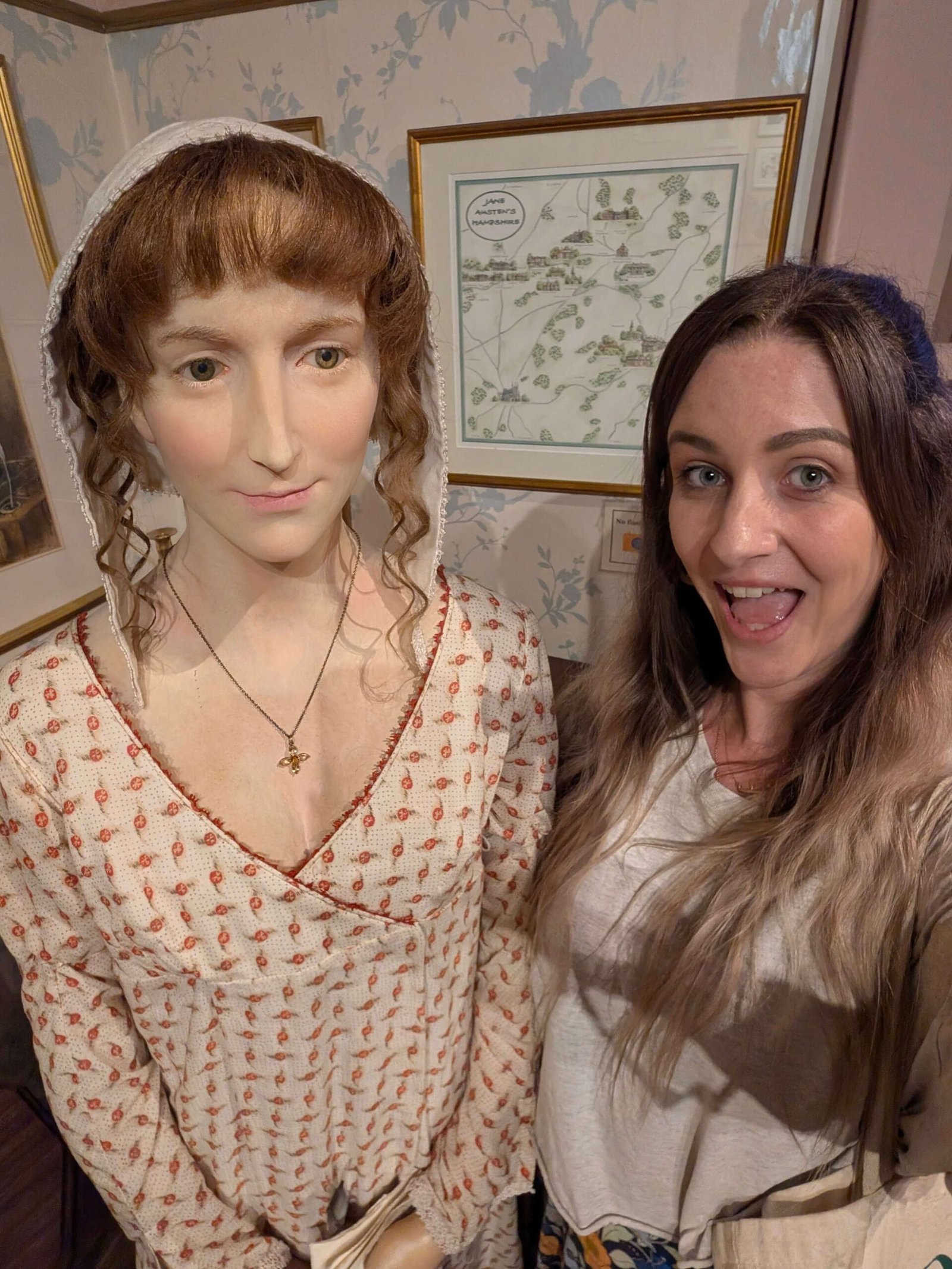
One of the Centre’s most talked-about features is its life-size waxwork of Jane Austen, and its backstory is more interesting than you might expect.
You see, we don’t really know what Jane Austen looked like, as there’s no confirmed portrait of Jane Austen from her lifetime. The only verified image is a small, unflattering sketch by her sister Cassandra, which even Austen’s own niece reportedly described as ‘hideously unlike‘ her aunt!
In 2002, David Baldock, director of the Centre, commissioned Melissa Dring, a portrait painter trained as a forensic artist by the FBI, to create a new likeness of Austen based on contemporary written descriptions from people who knew her, essentially treating it like a cold case.
The resulting portrait was unveiled in 2002, and in 2011 the Centre took things a step further, commissioning sculptor Mark Richards to turn Dring’s forensic portrait into a full, three-dimensional wax figure, with a costume created by Bafta and Emmy-winning costume designer Andrea Galer.
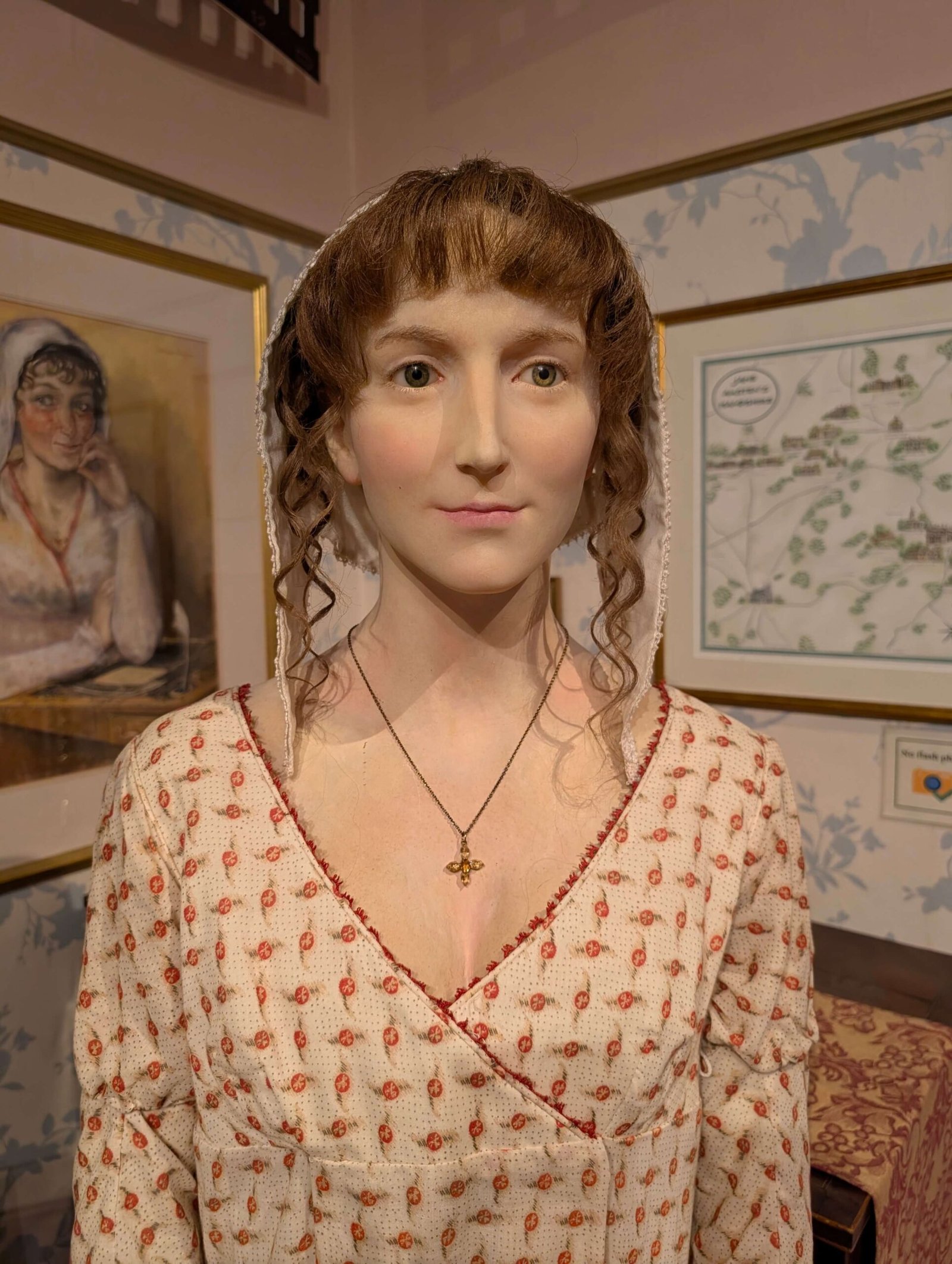
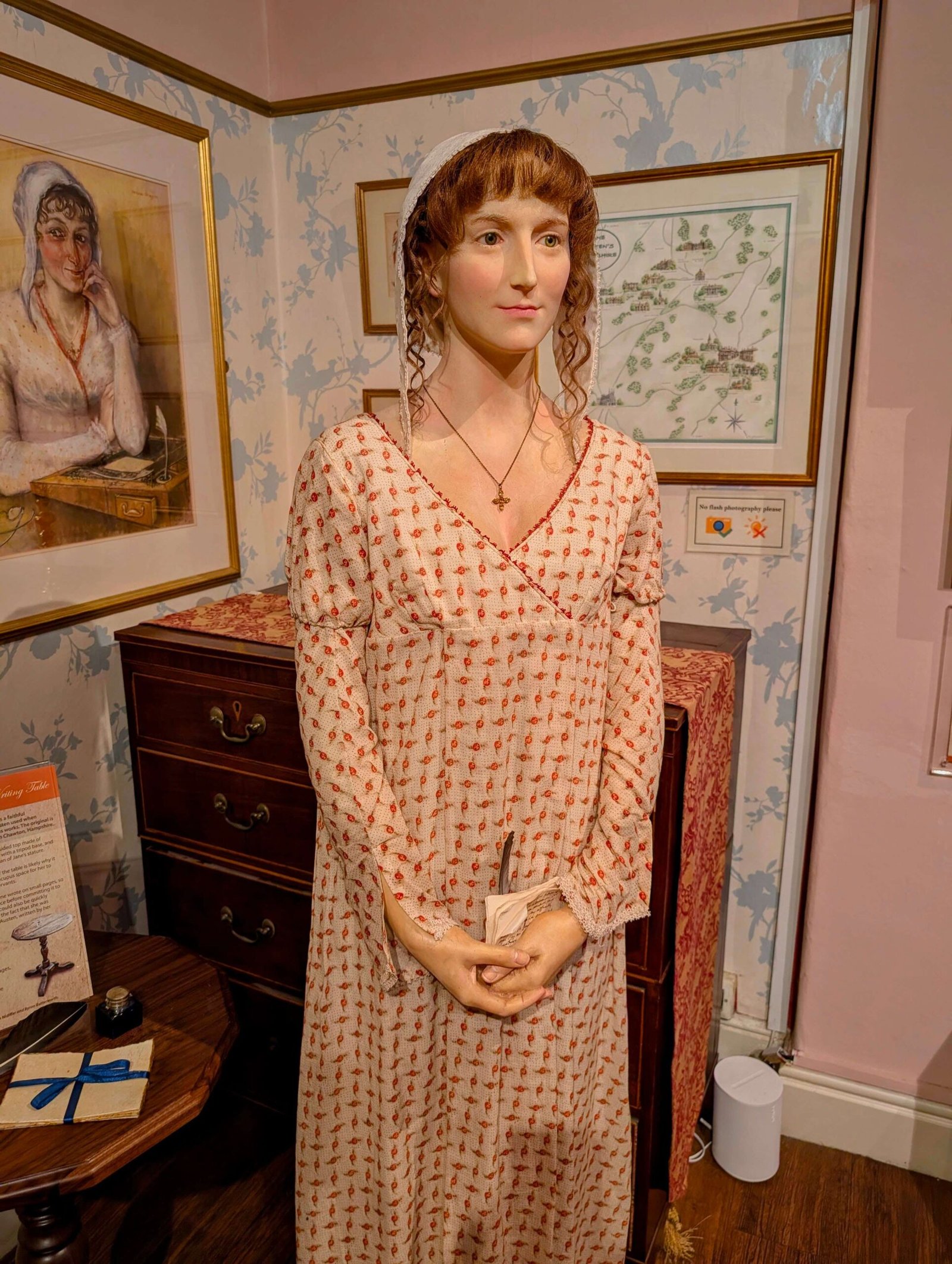
The finished waxwork, standing at 5’8″, was unveiled to the public and world media on 9th July 2014, and it remains on permanent display at the Centre, where you can pose for a photo with it – naturally, I couldn’t resist!
The Regency Tea Room
On the second floor of The Jane Austen Centre you’ll find the Centre’s Regency Tea Room, which has won an Award of Excellence from the Tea Guild and has rooftop views over the city.
It’s decorated in keeping with the rest of the Centre, with pale blue walls, period furniture, and a portrait of Colin Firth as Mr Darcy hanging by the fireplace for good measure.
The tea room serves a proper leaf-tea menu (with as many as 17 varieties on offer) alongside themed afternoon teas with names like ‘Mr Darcy Tea’ and ‘Lady Catherine,’ as well as lighter options like a pot of tea with a scone.
You don’t have to visit the Tea Room while visiting the museum, nor do you have to purchase a museum ticket to visit the Tea Room. You can see the full menu here, and purchase your Mr Darcey’s Afternoon Tea here.
The Gift Shop
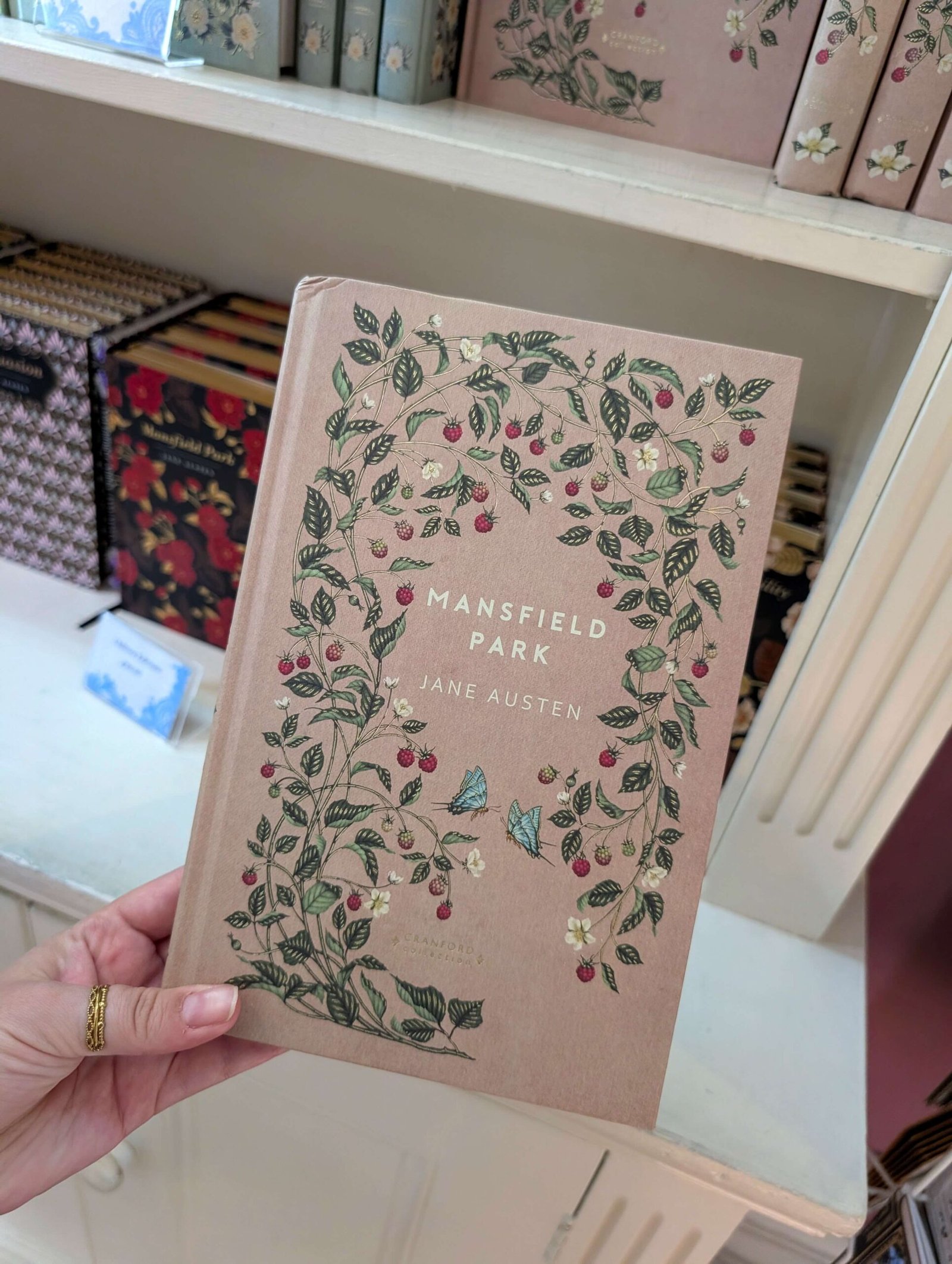
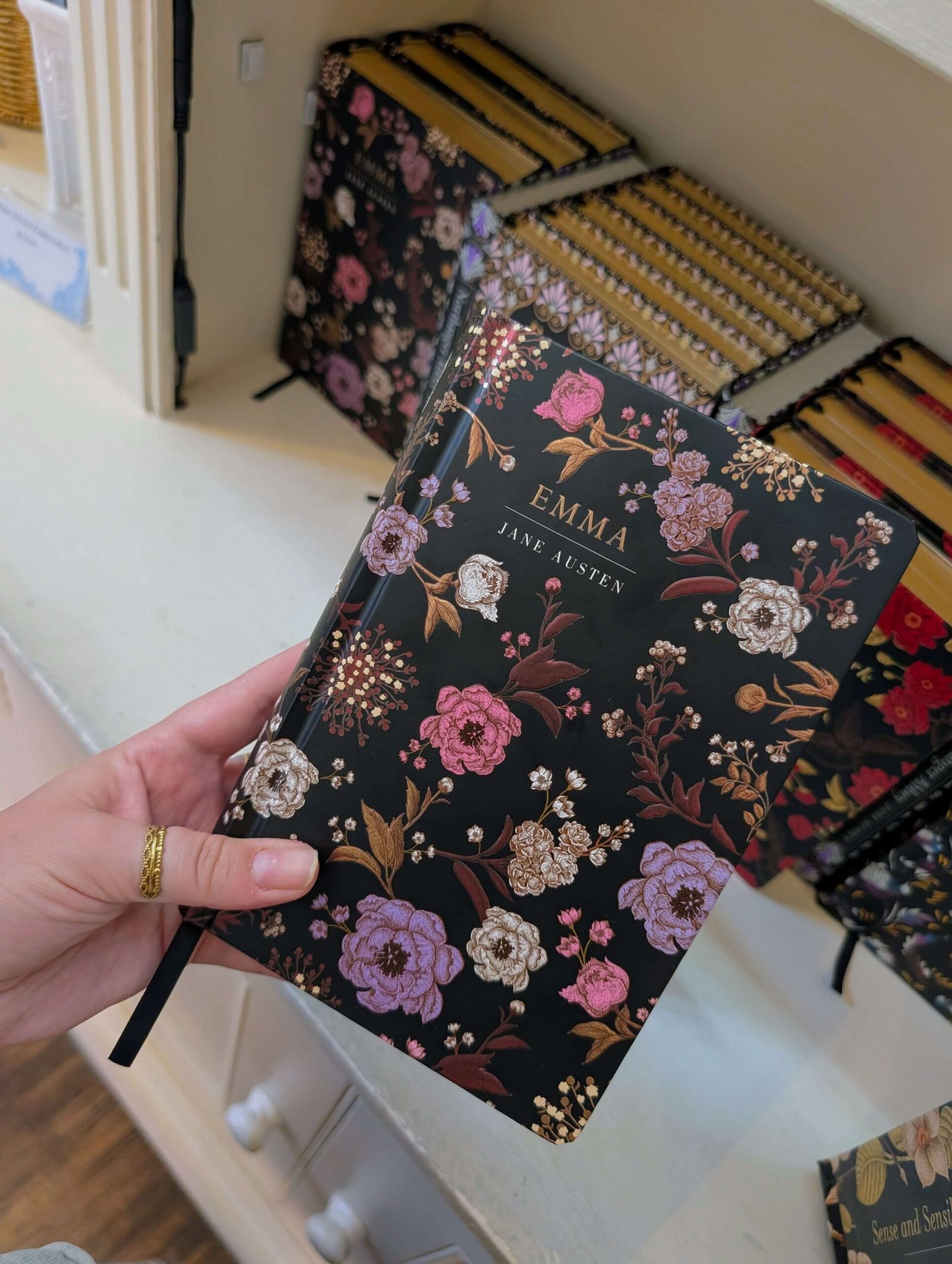
The Jane Austen Centre’s gift shop sells some beautiful editions of Austen’s books, as well as stationery, homeware, and even a range of Jane Austen branded jewellery.
It isn’t cheap, but you do get a 10% discount on both the tea room and gift shop included in the price of your museum ticket.
A Word of Caution
I have to be honest – I loved the passionate character actors and the depth of information about Jane’s life, but I’d hesitate to recommend the Centre to someone who isn’t a genuine Austen fan.
This is a museum built for real fans of Austen, so if you’re only visiting because you’ve seen it on a list of things to do in Bath, you might find it a bit niche and not worth the ticket price.
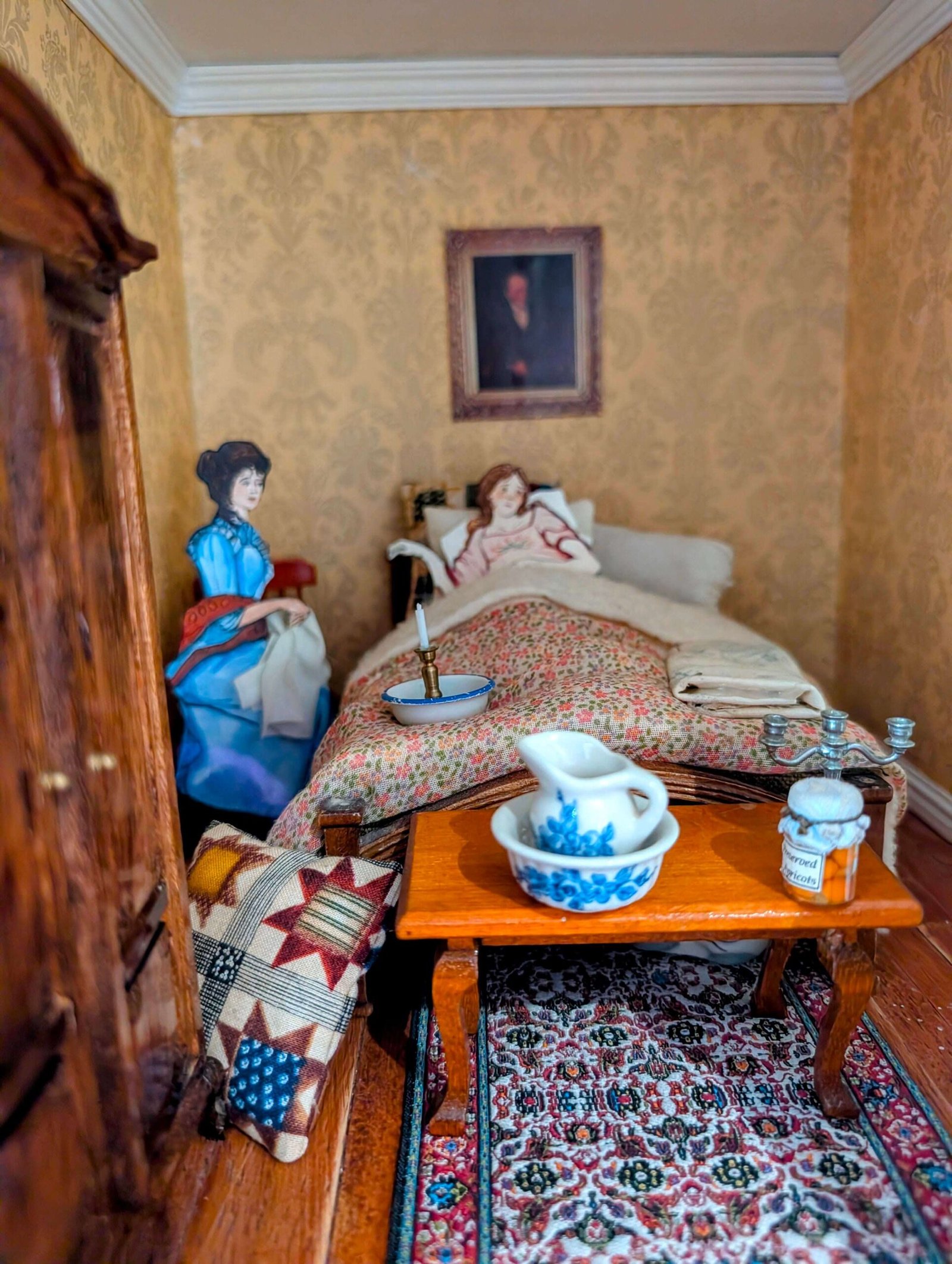
If you are a proper fan, though, it’s a different story entirely. The actors know an enormous amount about Austen’s life and are thrilled to share it, and there’s a level of detail here that will satisfy anyone with an interest in Jane Austen and her life.
Even if the main exhibition isn’t your thing, it’s still worth visiting the tea rooms upstairs or having a browse in the gift shop, since both are accessible separately from the paid exhibition.
Need to Know
Below is everything you need to know about opening times, entry fees, accessibility at The Jane Austen Centre, and more.
Please note that all information is correct at the time of publishing (August 2026).
The Jane Austen Centre Opening Times
Opening hours change with the seasons, so it’s always worth double-checking before you go, but as a general guide:
- Winter (November to early April): Sunday to Friday 10am to 4:30pm, Saturday 10am to 5:30pm
- Spring (April to June): Daily, 9:45am to 5:30pm
- Summer (July to late September): Daily, 9:45am to 6pm
- Autumn (late September to early November): Daily, 10am to 5:30pm
Last entry to the exhibition and tea room is generally an hour before closing.
The Jane Austen Centre Ticket Prices
- Adult: £17.00
- Concessions (students and over-60s): £15.50
- Child: £9.50
- Small Family (1 adult, up to 3 children): £29.00
- Family (2 adults, up to 3 children): £39.00
Children under 6 go free with a paying adult. Note that dogs aren’t permitted inside the Centre or Tea Room, aside from registered assistance dogs.
Buy your tickets here.
How to Get There
The Jane Austen Centre in Bath is centrally located between Queen Square and the Circus, about a 15-minute walk from Bath Spa railway station, and roughly a 5-minute walk from the Roman Baths. The nearest car park is Charlotte Street Car Park, with is about a 5-minute walk away.
The Jane Austen Centre address: 40 Gay Street, Queen Square, Bath BA1 2NT (Google Maps link).
Is The Jane Austen Centre Accessible?
Unfortunately, some parts of The Jane Austen Centre are not wheelchair accessible as there is no lift inside the building, and the 20-minute welcome talk and Tea Rooms are located at the top of two rather steep staircases. The toilets are located in the basement and are also not wheelchair accessible.
The gift shop is wheelchair accessible, and the main exhibition is also wheelchair accessible, as both are located on the ground floor and can be accessed via a ramp.
For visitors with hearing impairments, all videos featured throughout the exhibition include English subtitles, and a transcript of the introductory talk is available on request, as is a portable hearing loop system in the introductory talk room, which a member of staff will turn on for you if needed.
Assistance dogs are permitted throughout the Centre.
Best Time to Visit
If you want to avoid the worst of the crowds, aim for a weekday morning, ideally as close to opening time as you can manage, particularly during the summer months.
Given the narrow staircases and small exhibition rooms, it can feel very crowded at peak times, which can take away from the experience a bit.
The Jane Austen Festival
If you can time your visit for September, the Centre runs the Jane Austen Festival, a 10-day celebration that takes over the entire city with a costumed promenade, Regency balls, talks, workshops, and events.
The 2026 festival runs from 11th to 20th September. Even if you’re not the type to dress up yourself, it makes for a fun atmosphere to stumble into if your trip happens to overlap.
The Jane Austen Centre Bath | Final Thoughts
The Jane Austen Centre in Bath is a well-researched, lovingly put-together museum, and the story behind its waxwork alone shows how seriously the people behind it care about getting the details right.
At £17, it isn’t cheap, and I think that you’ll get the most out of this place if you’re already a committed Austen fan rather than someone ticking off Bath’s main attractions – when I was there, you could tell that most of the visitors hadn’t read any of Jane Austen’s work, and as I watched them zoom through the main exhibit and make a beeline for the Regency costume photo opportunities at the end, I couldn’t help but feel as though they were wasting their money.
That’s all I have for today, but as always, if you have any questions then let me know in the comments below, and if you’re planning a trip to Bath, you might want to check out my list of Bookish Things to Do in Bath and my review of the House of Frankenstein and the Abbey Hotel Bath.
Until next time,
XOXO
Note: I visited Bath as a guest of Visit Bath and received a media pass for complimentary access to The Jane Austen Centre. All opinions are my own.
If you like this article and would like to support my work, please click the button above to donate a couple of bucks and buy me a coffee. The revenue that I receive on this website is minimal, so support from my readers enables me to keep creating content that you (hopefully!) love to read.
Disclaimer: Travelling Jezebel contains affiliate links. If you make a purchase on a recommended site, I may make a small commission at no extra cost to you.