
Inside Penang Snake Temple: Is Malaysia’s Strangest Attraction Worth Visiting?
As soon as I arrived in Malaysia, and heard that there was a snake temple in Penang, I knew I had to go.
I had a bit of a hard time persuading my friends to come with me – first of all, it’s a 30 minute car journey south of George Town, and the online reviews are…mixed (to put it mildly).
The general consensus seems to be that the Penang Snake Temple really isn’t worth the effort and that you should only bother going if you’ve exhausted your list of things to do in Penang and have time to kill.
Were they right?
Well, there was only one way to find out.
Inside the Snake Temple Penang: Is Malaysia’s Strangest Attraction Worth Visiting?
Penang Snake Temple: A Brief History
Most temples do not contain snakes, let alone give them free rein to lounge around the altars. Penang’s Snake Temple, officially called the called The Temple of the Azure Cloud (Hock Hin Keong or Cheng Hoon Giam) is an exception.
The temple is a Chinese temple in Bayan Lepas, in the southwest Penang Island district.
It was built in 1805, in honour of a buddhist monk named Chor Soo Kong, also known as Patriarch Ching Chwee.
Chor Soo Kong was born in China in the Song Dynasty (960 – 1279), and was said to heal the sick and provide shelter to snakes in the wild.
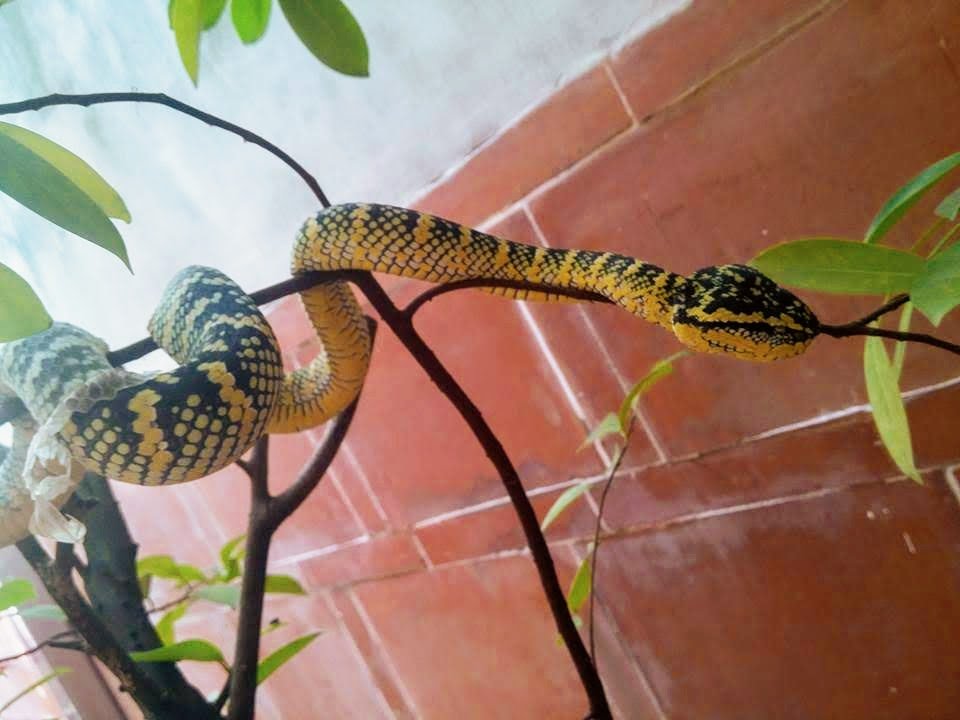
According to local legend, when the temple was completed, the local Wagler’s pit vipers (Tropidolaemus wagleri) slithered in and made the temple their home, where they have remained ever since.
Locals believed this was a sign of the monk’s spiritual presence and protection, with some even believing that the snakes are reincarnated disciples of the monk.
While most modern visitors are tourists, the Penang Snake Temple remains an active place of worship. Thousands of devotees from as far as Singapore, Taiwan and China visit each year during the festivals celebrating Chor Soo Kong’s birthday – on the 6th day of the 1st, 6th, and 11th months of the Chinese lunar calendar.
During these periods, the temple is lively with prayers, incense, and cultural performances – very different from the quiet everyday atmosphere.
What it’s like visiting the Penang Snake Temple
If I’m honest, I can understand why some reviewers are underwhelmed. If you’ve been temple-hopping around Southeast Asia, the architecture of the Snake Temple won’t blow your socks – it’s a simple, modest, Chinese Hokkien temple, and you don’t even have to take your shoes off to enter!

However.
You don’t go to Penang Snake Temple to marvel at the ornate stone carvings.
You go to see snakes, and see snakes you will.
Snakes in the potted plants.
Snakes coiled around picture frames.
Snakes snoozing on branches above your head.
Snakes everywhere.
Most of the snakes are Wagler’s pit vipers, a species known for being venomous, though they are not deadly to humans, nor are they known to be aggressive.
These vipers naturally tend to remain still, which is why you’ll often see them lounging around without moving much (some online reviews claim that the snakes must be sedated because of this, but they are naturally sedentary and docile during the day).
There are no barriers between the snakes and the public at Penang’s Snake Temple.
Important note about safety
When I visited the temple, a local told me that the snakes at Penang Snake Temple have been de-venomed in a process called venomoid surgery which involves removing the snake’s venom glands, making them permanently unable to inject venom in a bite.
With that being said, it’s unclear whether this is actually true. This claim is not supported by official sources and the practice is controversial and outlawed in many places.
What we know to be true is:
- The snakes are well-fed, which reduces movement.
- They are naturally calm diurnal species.
- Temple staff keep a close watch, and signs warn visitors not to touch the snakes.
- The incense smoke is believed to make them more passive (though this is debated).
Meeting the snakes up close
As soon as we stepped inside, we saw several pit vipers curled around some of the picture frames on the walls.
I then spotted Nelson (!), a huge python lounging with his handler. The handler wanted RM25 for a photo (this was a few years ago, so I’m sure the price has increased now), but after explaining I didn’t need the professionally framed version, he let me take my own photos for about RM8.
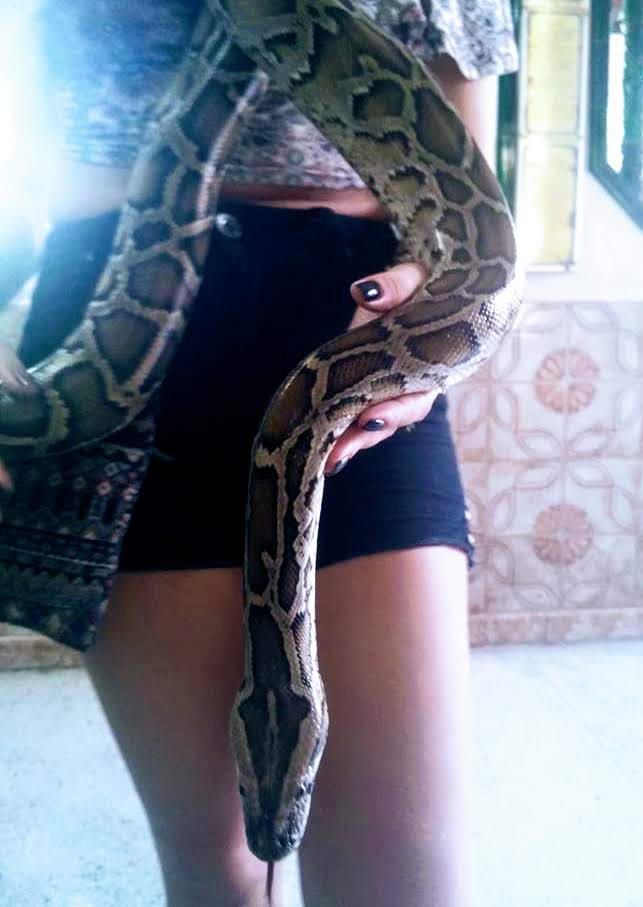
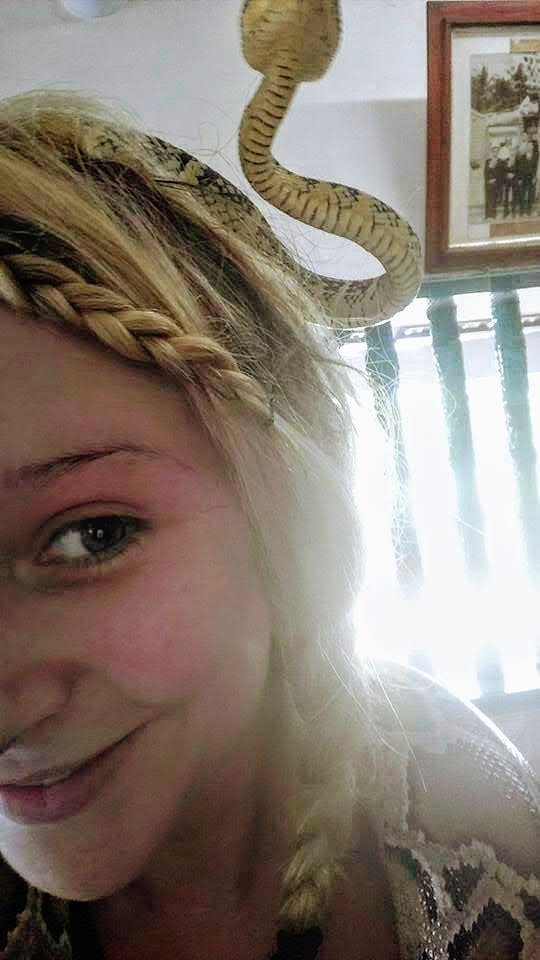
As soon as Nelson was safely lodged around my neck, my new snake handler friend decided it that would be funny to place a pit viper on top of my head!
Deciding not to panic, I instead did what every reasonable person travelling in Southeast Asia would do – I took a selfie.
When I could finally bring myself to part with Nelson, we wandered into the courtyard garden behind the main hall.
This outdoor area is where the Shrine Hall of Kuan Lin is located, along with a fenced-off area where the snakes can rest, hide from the harsh Malaysian sun, and (supposedly) breed.
Although the gardens are small and simple, the snakes seem to have a lovely habitat and seem genuinely undisturbed by visitors.
The Snake Museum (formerly Snake Farm)
Next to the temple is the Snake Museum (which many still call the Snake Farm). For a small fee, you can admire more than 50 species of snake, including pythons and the iconic King Cobra.
An English-speaking guide walked us through the museum explaining venom types, habitats, and the background of each snake. Although most of the snakes are kept in small glass enclosures (which I have mixed feelings about), I did find the information interesting and I learnt a lot from my guide.
The guide then led me into a small enclosure where a a beautiful yellow Burmese Python was reclining on a table – the tour guide told me that if I could stroke it from head to tail then it would bring me good luck, and so that’s exactly what I did. There was a hair raising moment when the python jerked its head around to see what I was doing, but when he saw that it was only me, he didn’t seem too bothered.
We then went on to a larger enclosure where we saw a massive 8-metre long reticulated python, which, as the guide gleefully explained, eats cows for breakfast.
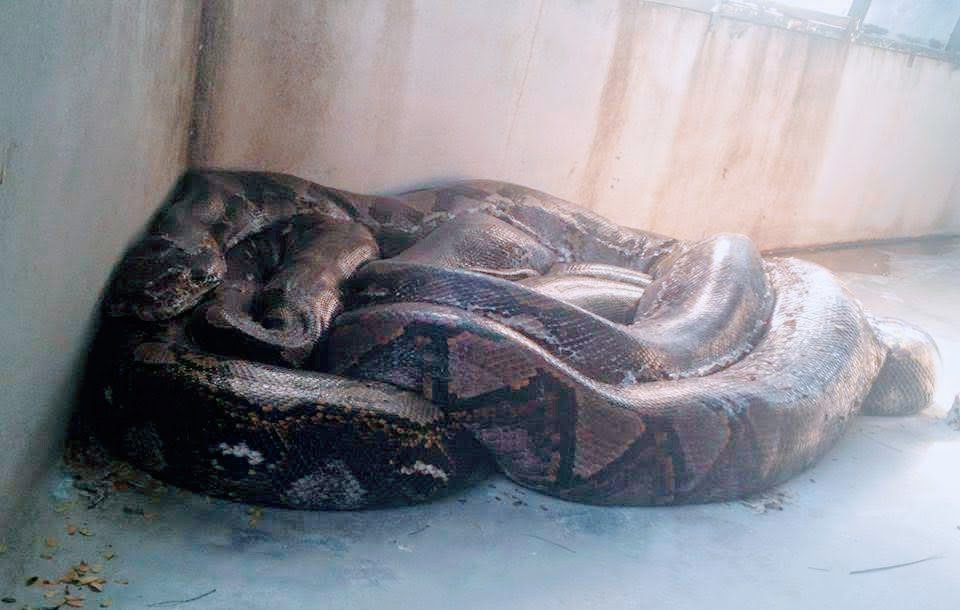
He explained that as I am smaller than a cow, it would be extremely easy for the python to eat me (a light snack in comparison), and suggested that it wasn’t in my best interests to touch this one.
I didn’t need telling twice.
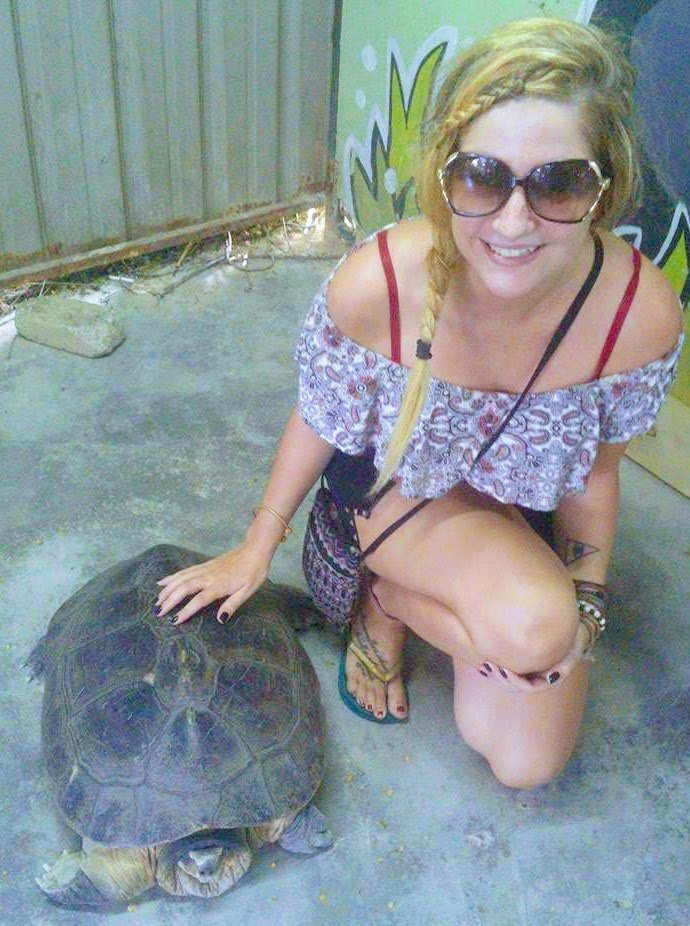
He then introduced me to a ‘centuries old’ tortoise, and I was even lucky enough to see the King Cobra (something I hadn’t wanted to run into when I was living in Cambodia but was quite happy to see behind a barrier!).
Is the Penang Snake Temple worth visiting?
If you’re terrified of snakes, this will be your personal hell (although if you’re terrified of snakes then why the hell are you reading this article?!).
If you’re indifferent to snakes, you may find the Penang Snake Temple underwhelming.
However, if you:
- Enjoy quirky attractions
- Love snakes
- Are curious about local legends
- Or simply want something different from the usual Penang itinerary
…the Snake Temple is absolutely worth a visit. It’s unusual, memorable, and gives you a glimpse into a niche piece of Penang’s cultural and religious history.
Penang Snake Temple – Practical Information (Updated 2025)
- Location: Bayan Lepas, about 10-12 km from George Town. The temple is very close to Penang International Airport.
- Opening times: Typically 8:00 am – 6:00 pm, though there doesn’t seem to be a general consensus on this.
- Admission: Free to the temple itself, but you’ll need to pay if you want to visit the Snake Museum.
- Getting there: Grab is the easiest option and usually cheap (RM15–25 from George Town). Rapid Penang Bus routes stop nearby (Routes 302 and 401E serve the area). If you’re heading to/from the airport, the temple is just minutes away.
- Dress code: There is no strict dress code, and you do not need to remove your shoes. Casual clothing is fine.
More Malaysia Articles
Best Happy Hours in Kuala Lumpur
Why I Didn’t Love Perhentian Kecil
Tips for Travelling in Southeast Asia
Penang Snake Temple | Final Thoughts
Have you ever been to the Snake Temple in Penang? What did you think? Was it a disappointment, or did you think it was as cool as I did? Please let me know in the comments below!
xoxo
If you like this article and would like to support my work, please click the button above to donate a couple of bucks and buy me a coffee. The revenue that I receive on this website is minimal, so support from my readers enables me to keep creating content that you (hopefully!) love to read.
Disclaimer: This page contains affiliate links. If you make a purchase on a recommended site, I may earn a commission at no extra cost to you.

Hi Dani just found your blog, auntie Jan told me about the snake on your head! Barb xx