I love Budapest. I’ve visited a few times, and whenever someone asks me about which European city break they should book next, Budapest is always one of my top recommendations.
With stunning architecture, tonnes of things to see and do, quirky ruin bars, and hearty Hungarian comfort food, you really can’t go wrong here.
In this Budapest travel guide, I’m going to give you quick introduction to the city. This article is designed for first-time visitors, so it won’t be as in-depth or exhaustive as some of the other articles out there, but it should be enough to help you get a feel for the city, and provide you with a great starting point.
Are you ready? Then let’s get into it.

Where to Stay in Budapest – Buda, or Pest?
Budapest is easy to get your bearings in, thanks to the Danube cutting straight through the middle. Buda sits on the hilly west bank, with the fairytale Fisherman’s Bastion looming over the river. Pest, on the east side, is flatter, busier and where most of the action happens.

You’ll spend plenty of time on both banks, but Pest has more restaurants, bars and shops, so makes sense to book your accommodation here and explore Buda in the daytime.
Trust me – you don’t want to be climbing up the hills of Buda when you’re stuffed full of goulash after an evening out!
Getting to Budapest
Plenty of European cities have direct flights to the Hungarian capital. Travellers coming from further afield can explore flights to Budapest with Air France, including connections via Paris Charles de Gaulle.
From the airport to your hotel
The easiest way in is the 100E airport bus. It runs 24 hours a day, takes around 40 minutes, and goes straight to Kálvin tér, Astoria and Deák Ferenc tér.
All three are central Pest, so there’s a good chance you’ll be dropped within walking distance of your hotel.
A single costs 2,500 HUF (roughly £5-6), and it needs its own ticket, so your normal public transport pass won’t cover it.
If you’re on a budget, the 200E bus plus the M3 metro does the same job for a fraction of the price. The catch is that it’s slower, and you’ll be dragging your suitcase down metro stairs. If you land late at night or have a lot of luggage, I’d just pay for the 100E and be done with it.
Ride the yellow Line 1
Once you’re in the city centre, you won’t need a car: Budapest has buses, trams and a metro, and most of it can be covered on foot. I’ve never taken public transport in the city centre, and I’ve managed to see pretty much all of the main Budapest attractions simply by walking there.
With that being said, the little yellow Line 1 metro is worth riding at least once. It opened in 1896, and the tiny, tiled stations feel a world away from a modern underground. It’s also one of the cheapest bits of sightseeing in the city.
READ | 14 Budapest Facts You Probably Didn’t Know
Best Things to Do in Budapest
Spend a day beside the Danube
Parliament is the building that dominates every photo of Budapest. This impressive gothic structure is the 3rd tallest parliament building in the world and has over 600 rooms inside!
Most people take a quick photo and leave, but if you want to see inside, tours are available – just be sure to book ahead to avoid disappointment.
Just a few steps away is the Shoes on the Danube Bank, a memorial to the Jews who were killed here during the Second World War. It’s a row of iron shoes along the water’s edge, and it’s simply, but very moving.
From here, carry on south along the river, and cross the Chain Bridge as you head over into Buda.

Castle Hill
Castle Hill is the tourist heart of Buda. The Gothic Matthias Church, Buda Castle, and Fisherman’s Bastion are the best-known sights, and the streets around them are a pleasure to wander, with plenty of cafés and photo stops to break up the walk.
The Bastion is not only majestic in its own right (in my opinion, it’s the most beautiful place in Budapest), but the view across the river to Parliament is also stunning.
This guided tour of Buda Castle District includes the Fisherman’s Bastion, Buda Castle, and Matthias Church, and is perfect for history lovers who want to get more out of their visit than a few aesthetic photos.
Budapest Thermal Baths
Budapest has a long bathing tradition, and visiting a thermal bath is easily one of the most popular things to do in Budapest.
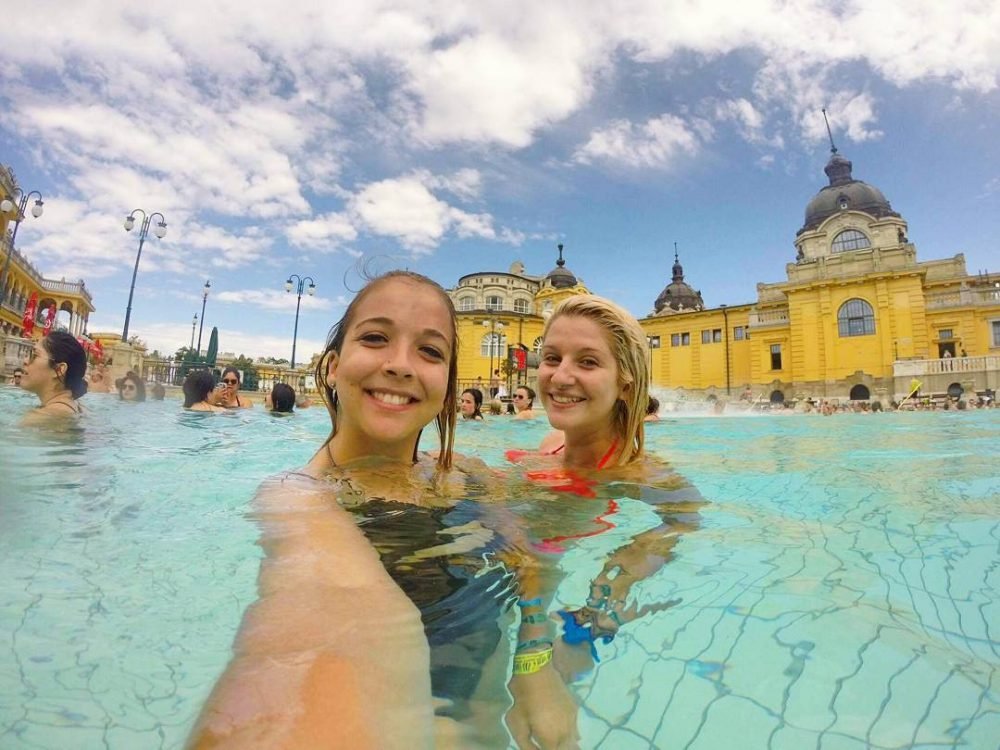
For a first-time visit, Széchenyi is the obvious choice. This is the one I went to, and while it’s definitely touristy, it’s popular for a reason. It’s absolutely huge, has both indoor and outdoor pools, and soaking outside with the city skyline around you is a real bucket list moment.
A full-day ticket with a locker is roughly 13,000 HUF on a weekday (prices rise at weekends), so go early to beat the crush, as it opens at 7am on weekdays.
You may see older Budapest travel guides recommending Gellért thermal baths, but unfortunately Gellért is closed for renovation until around 2028.
You can still admire the Art Nouveau exterior from the street, but you can’t bathe there.
If you’d rather somewhere a bit more tranquil than Széchenyi, I’ve heard great things about Lukács, Rudas, and Veli Bej, an Ottoman bath dating back to the 1570s.
Allow a few hours for whichever thermal bath you choose. Pack a swimsuit and flip-flops, and check the current rules before you set off, particularly if you have your sights on a specific pool or treatment. Swimwear is compulsory at mixed sessions, and some baths have single-sex hours.
Food in Budapest
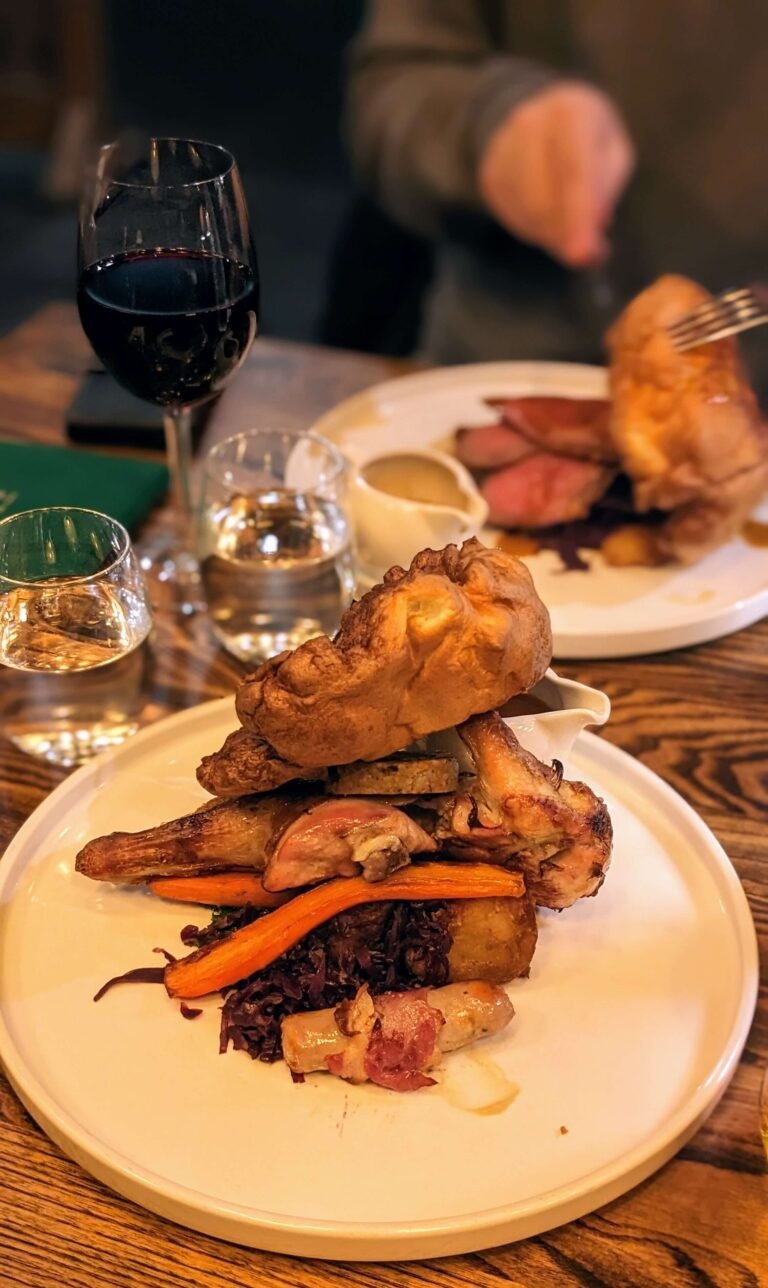
Almost everyone has heard of goulash, a hearty, slow-cooked soup made with beef, onions, potatoes, tomatoes, and paprika that is Hungary’s national dish.
Chicken paprikash is definitely worth seeking out. It’s a dish made up of tender chicken in a creamy, paprika-infused sauce, traditionally served over small egg dumplings called nokedli. It’s exactly the sort of heavy, comforting dinner you’ll want after a long day of walking.
One of my favourite Hungarian street foods is lángos: deep-fried dough, usually topped with garlic oil, sour cream and grated cheese. You’ll often hear it referred to as ‘Hungarian pizza,’ and it’s an absolute must-try if you’re looking for a quick and filling lunch on the go.
For something sweet, try kürtőskalács, or chimney cake, a spiral of sugary dough cooked over charcoal and served warm.
The Great Market Hall
The Great Market Hall holds the title of the largest indoor market in Hungary and is a foodie’s paradise, with stalls selling a variety of goods from fresh fruits, pickled vegetables, and cured meats to Hungarian spices, wines, and confectioneries.
This is a great place to see the range of Hungarian produce under one roof. It’s free to enter, and the building is gorgeous as well.
With that being said, The Great Market Hall is firmly on the tourist trail, and prices are higher here than elsewhere in the city. If you want something more local, the neighbourhood market halls are cheaper and quieter.
Final Thoughts
Remember – you don’t need to cram in every single sight. Budapest rewards a slow first visit, and you’ll appreciate the city much more if you aren’t trying to rush around squeezing everything in.
Walk the river, cross Chain Bridge, pick one bath, sample some local cuisine, and leave yourself time to wander! Budapest is a beautiful city, and is best experienced when you stop ticking things off and just see where the streets take you.

Budapest is a city that’s easy to like, and it works as a long weekend or the start of a wider trip through Central Europe (if you have a week or more, I recommend visiting Krakow, Prague, and Budapest all in one trip, which is how I first discovered the cities).
That’s all I’ve got time for today, but as always, if you have any questions then don’t hesitate to ask in the comments section below!
Until next time,
XOXO
If you like this article and would like to support my work, please click the button above to donate a couple of bucks and buy me a coffee. The revenue that I receive on this website is minimal, so support from my readers enables me to keep creating content that you (hopefully!) love to read.
Disclaimer: Travelling Jezebel contains affiliate links. If you make a purchase on a recommended site, I may make a small commission at no extra cost to you.